
Searching for That Spoonful
The Grateful Dead, Howlin' Wolf, and Charley Patton

The spoonful is all your desires too hot to sip, too alluring to put down. Cravings, fixes, the vices we imagine could satisfy permanently, if only the right intensity, the right dose, the right moment.
You can drown in a shallow spoonful. The blues knows this. I want to better understand the spoonful, the symbol of perfect pleasure, from Charley Patton in the Delta to Howlin’ Wolf in Chicago.
Charley Patton’s “A Spoonful Blues”
When saying nothing says so much
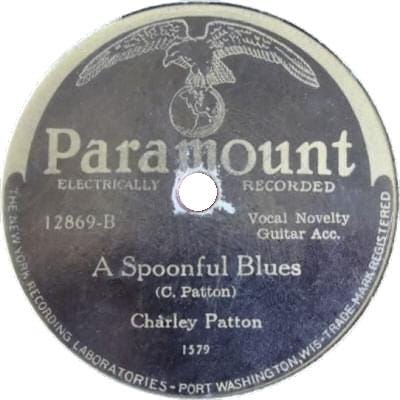
“A Spoonful Blues,” got me into Charley Patton. When he pushes his voice as high as it’ll go (Would you kill a man dead?), keeping his rasp all the while — the world reduces to a smokey juke joint. But more than mere sound, “Spoonful” is a rare Patton cut with a unified focus. What is the spoonful, and how does it dictate the actions of everyone who’s had a taste?
Besides the first and final lines, Patton never says “spoon.” He never says what the spoon holds. Each spoken line trails off into a riff, the whine of bends and slides begging for that unnamed spoonful.
In all a spoon', 'bout that spoon'
The women goin' crazy, every day in their life 'bout a...
It's all I want, in this creation is a...
I go home (wanna fight) 'bout a...
Doctor's dyin' (way in Hot Springs!) just 'bout a...
These women goin' crazy every day in their life 'bout a...
Would you kill a man dead? (yes, I will!) just 'bout a...
Oh babe, I'm a fool about my...
(Don't take me long) to get my...
Hey baby, you know I need my...
It's mens on Parchman (done lifetime) just 'bout a...
Hey baby, (you know I ain't long) 'bout my.
“A Spoonful Blues” is ostensibly about cocaine. Everyone — men and women, prisoners and doctors — fiends for a sniff. Patton generates a fervency by never naming the thing — he’s searching, along with everyone else, but it is always out of reach, unmentioned.
As the spoonful goes unnamed, Patton allows anything to fill its bowl. It isn’t really cocaine, or sex, or booze that everyone’s after, it’s the yearning for respite, an imagined ecstasy thought possible post (neuro)chemical boost. Patton’s ragtime bounce fills this lack in a way that words only approximate.
Racist uproar prompted the prohibition of cocaine in 1914. Media spread a myth of the hyper-sexualized Black male cocaine user, a threat to white women everywhere. But in reality, rural, middle-class white women made up the majority of cocaine, morphine, and heroin addicts in 1900 — nearly 5% of the U.S. population was addicted to one of these prescription medications.
Howlin’ Wolf’s “Spoonful”
Patton’s protégé follows desire toward death
Written by Willie Dixon, “Spoonful” expands Charley Patton’s “A Spoonful Blues,” filling the titular utensil with more passions, more violence. Howlin’ Wolf — born Chester Arthur Burnett — learned guitar from Patton. Wolf also developed his raspy delivery and commanding stage presence from mimicking Patton, a renowned entertainer.
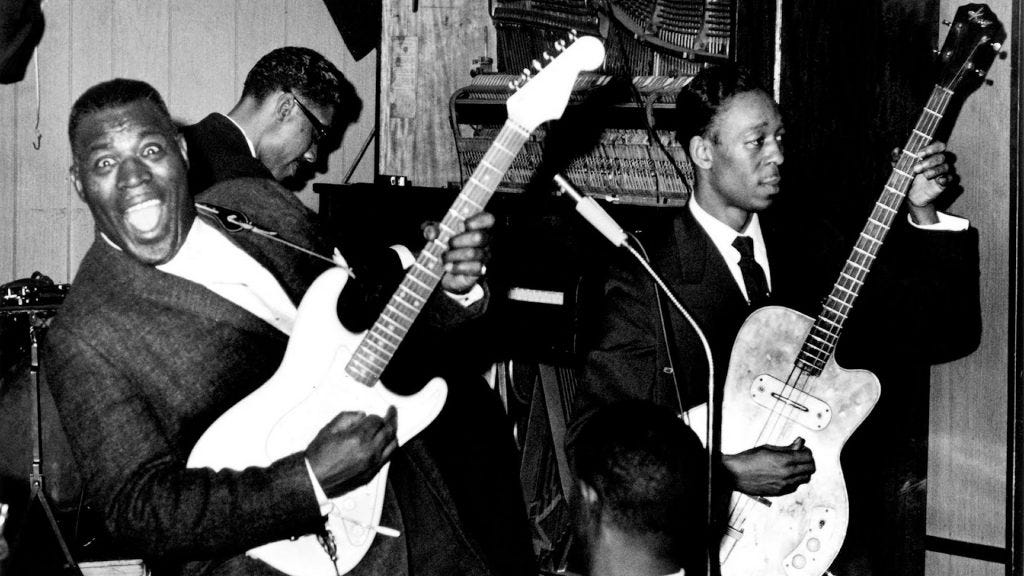
“Spoonful” is icky, mischievous. Hubert Sumlin shoots toxic, belated bursts of hellfire from his Les Paul. Every note lashes out. Sixty years later, Wolf’s swaggering vocals still show their influence in Future’s grumble and DMX’s shouts. This song makes me feel like a bad man in the best way.
Wolf’s “Spoonful” makes apparent what Patton only implied: the fix we chase takes many forms: love, sex, money, power. Like Patton, Wolf lets music say what words cannot. Sentences disappear before we see the contents of the spoon.
Picture this. A spoonful of storming sea, swirling inward. At center, a vortex vanishing to unknown depths. This is the force of “Spoonful,” a never-ending tug toward death. Delay all you can — one spoon of lead from forty-five / Save you from another man — but ultimately, everything fight about a spoonful.
P.S. Grateful Dead, “Nobody’s Spoonful Jam”
One for the road
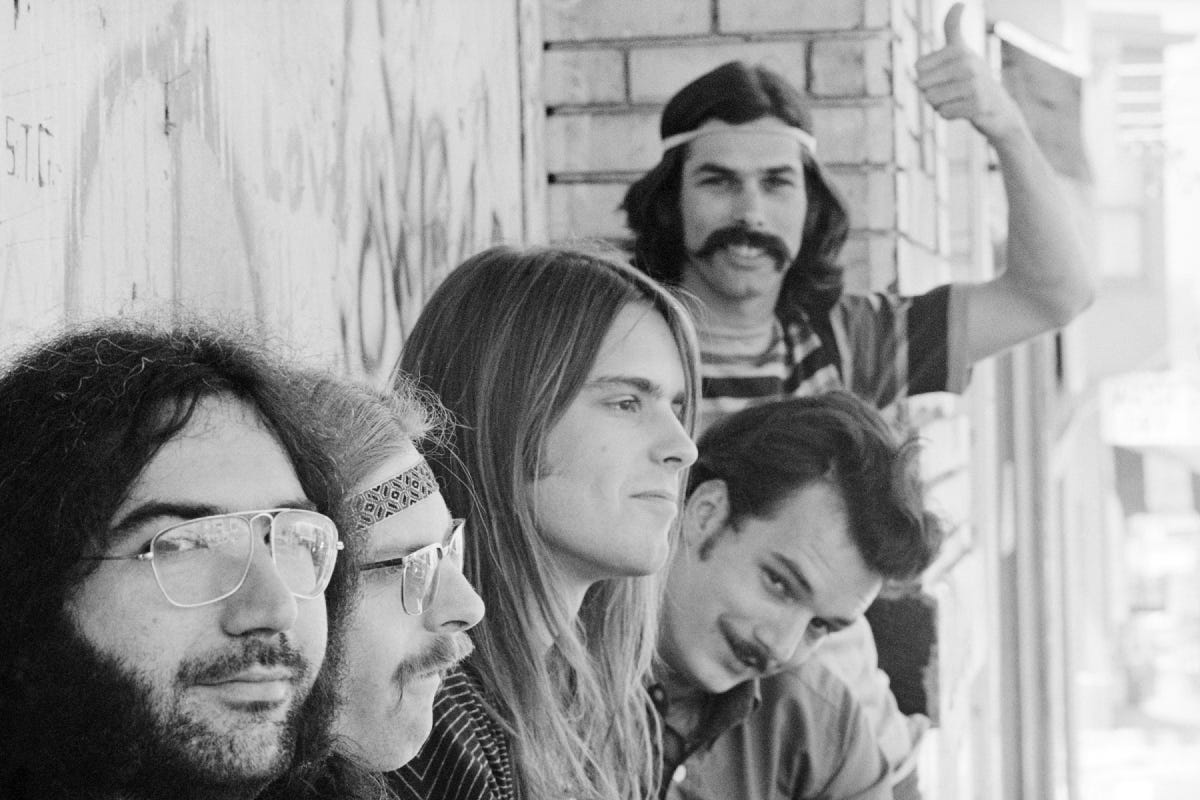
An Aoxomoxoa studio outtake. The search for that spoonful incites a ten-minute jam, Jerry speaking in aphorism more than paragraphs. A phrase here, a phrase there. Eventually, he mimics Howlin’ Wolf’s vocal melody long enough for the spoonful to begin materializing. But then it’s gone; we’re elsewhere, holding different spoons.