
The sound down there
Bob Dylan & The Band, Eric Von Schmidt, Blind Boy Fuller, and what it sounds like when I follow you down.

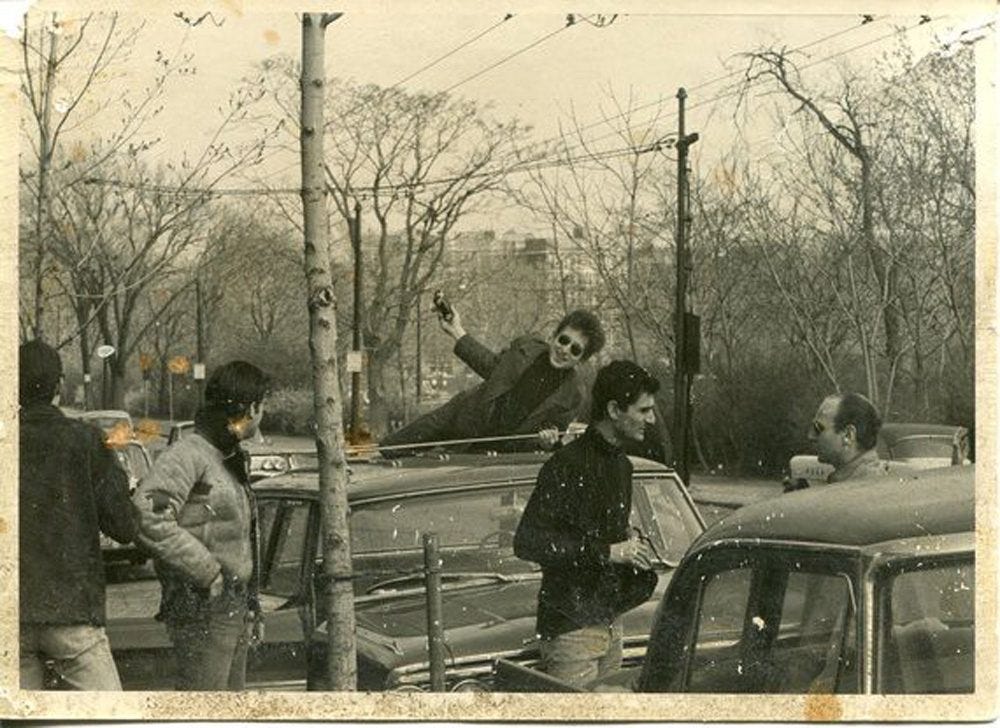
Acoustic to electric, Hibbing to Harvard to the Haight, to trace Bob Dylan’s “Baby, Let Me Follow You Down” is to follow the path of a certain American music as it evolved from mere imitation to something more.
The song is a lot of things, not least the title of Eric Von Schmidt and Jim Rooney’s essential illustrated history of the Cambridge folk scene (which you should buy and read if you haven’t already).
Dylan played essentially two versions of the song: the first on his 1962 self-titled debut, composed of mostly standards; the second a raucous electric number from his ‘66 world tour, backed by the musicians who would become The Band. (And one more at the Last Waltz, but never mind that.)
If we follow the song, its history and sound, we might just glimpse what it is making all that noise down there.
The green pastures of Harvard University
I first heard this from Rick Von Schmidt
He lives in Cambridge
Rick’s a blues guitar player
I met him one day in the green pastures of Harvard University
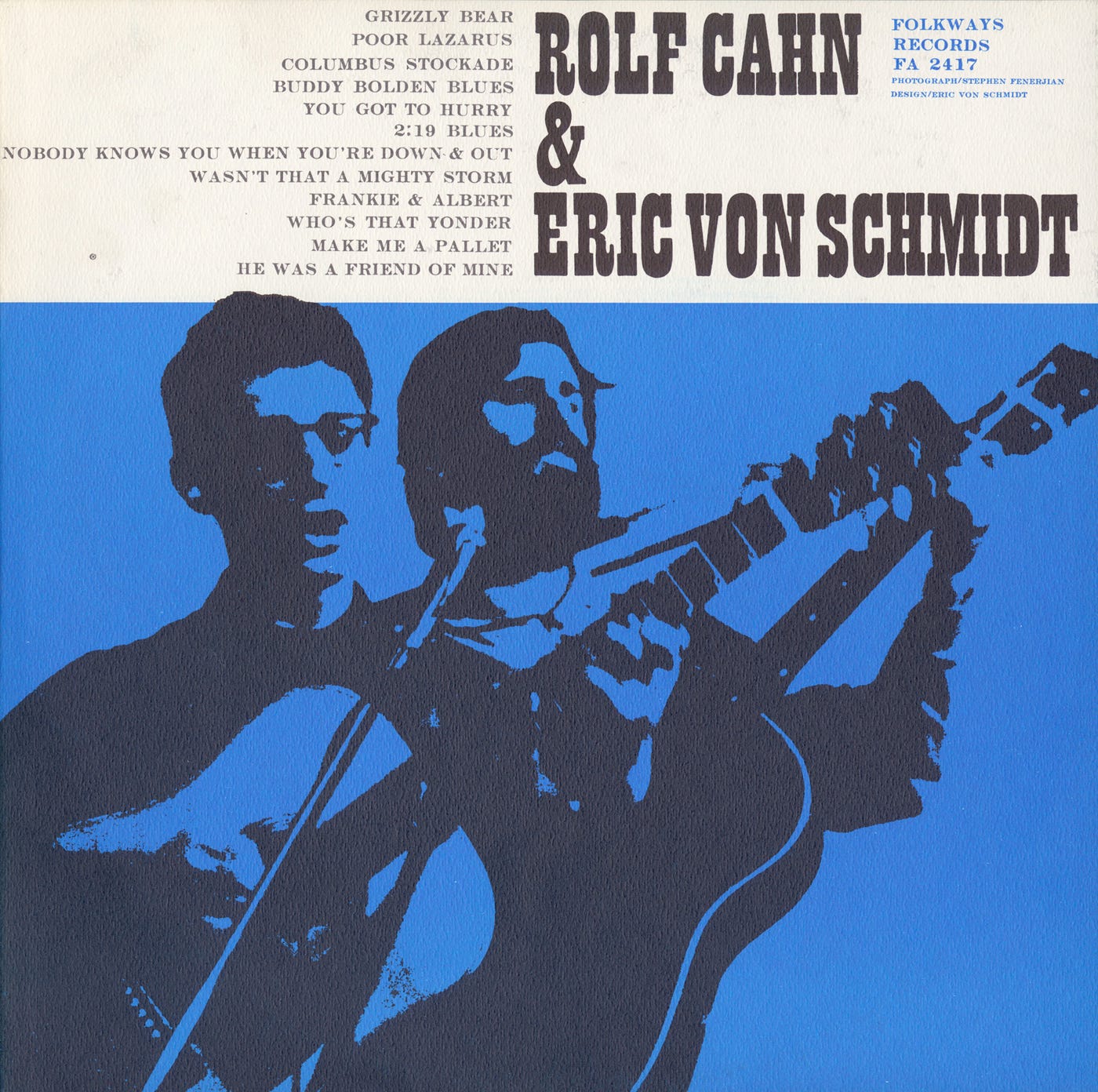
So in his Cambridge sojourn, Dylan learned “Baby, Let Me Follow You Down” from Eric Von Schmidt, the blues repository who held court in Harvard Square.
(If Dave Van Ronk is the Mayor of MacDougal Street, what does that make Von Schmidt? Joe Boyd has a good extended riff in The Believer (RIP) on just this.)
As Von Schmidt recalls, he learned the song from Geno Foreman (more on Foreman another time), who picked it up from a Blind Boy Fuller 78, “Mama Let Me Lay It on You.”
According to none other than Wikipedia, the tune was first recorded as “Don’t Tear My Clothes” in 1935 by a group called the State Street Boys, fronted by Big Bill Broonzy.
That same scholarly source also cites Rev. Gary Davis’s “Please Baby,” an instrumental not withstanding some semi-sensicle mumbles, as a primary influence on Von Schmidt’s version of the song — and thus Dylan’s original version. Fuller and Davis were stalwarts of the Durham, North Carolina, blues scene in the ‘30s. In a 1962 interview with Alan Lomax, Davis claimed to have taught Fuller how to play the blues, but I’d take the notoriously cantankerous Davis with a healthy helping of salt.
Whether Davis’ or Fuller’s or Broonzy’s, the song is essentially the same in sound and story. It’s a dirty blues, the narrator begging to get between the addressee’s legs, alternating between proposed acts of service and threats of violence. “I’ll buy you a fish-tail coat, baby I will cut your throat,” Fuller sings, not with malice but something more akin to pathos.
The version Dylan ultimately cobbles together from this potpourri of influences omits any explicit reference to violence. It’s implied, though, in his willingness to “do anything in this God almighty world” to go home with her.
It took the best minds of his generation to learn a song about begging to get laid. Ironic, isn’t it, that Dylan had to get learned, climb to the highest heights of the Ivory Tower, to get this low-down? And it is down, into a primal soup, comprised of death and sex and folk and blues.
And the only Eric Von Schmidt version I could find:
Had a feeling I was falling
Following Newport ‘65 and the electric debacle, Dylan set off on a world tour, backed by members of what had been The Hawks and would become The Band. For 45 dates, he played two sets: the first acoustic, the latter electric.
Those second sets drew the ire of folkies worldwide. Especially in England, Dylan and co. faced boos and heckles. Hopped up on speed, he heckled back.
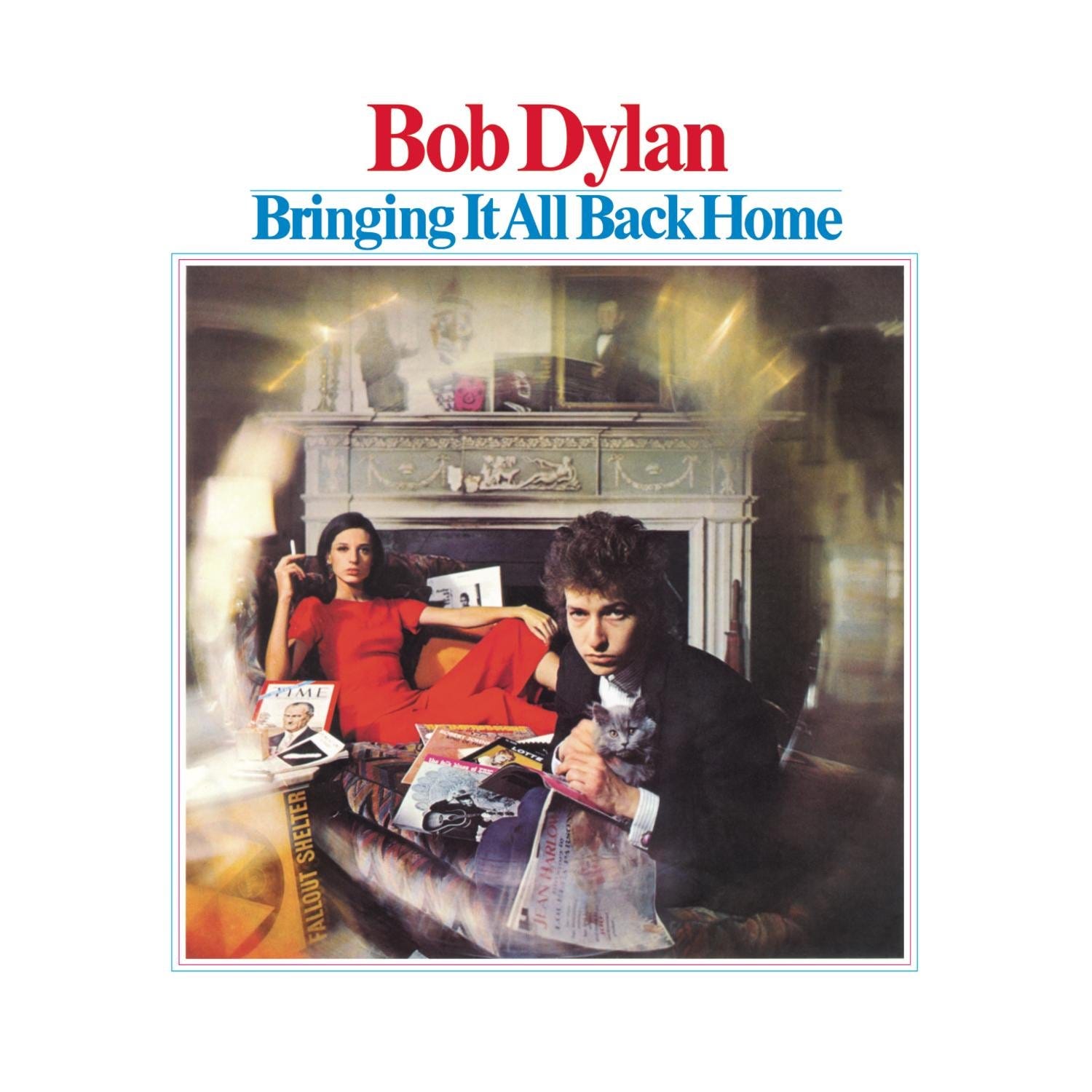
Even as Dylan began releasing electric tunes on Bringing It All Back Home, he nodded back to his folk roots, and specifically Eric Von Schmidt. Check out the copy of The Folk Blues of Eric Von Schmidt almost centered on the cover.
My favorite of the electric numbers from the ‘66 tour is the new-and-improved version of “Baby, Let Me Follow You Down.” It is uncontrolled, a product of inertia, like Casey Jones’ train let loose down the tracks. The band seems to find it as it goes. What begins as just a whining harmonica and quiet guitar blooms as The Band comes in, another guitar, the drums, the bass, an organ and a piano.
Everyone takes turns spinning licks between vocal lines. It can’t be reduced to blues, whatever this music is. Its primary characteristic is its patchwork quality, the possibility that any one musician might appear at the helm. It’s frenzied, the runaway rhythm section, improbable seeming that anyone can find the composure to solo (Garth Hudson on the organ doesn’t quite succeed). Dylan matches — or makes? — the feverish sensation. His verses no longer mere mimicry, his trip down psychedelic-ized with golden shirts and purple twine, and the risk — always the risk — of him losing his mind.
This version, from the so-called “Royal Albert Hall Concert” (not actually at the Royal Albert Hall) is the best preserved.
And this one, from a month earlier in Sydney. Slower, sloppier, but at a pace that allows Richard Manual on piano a bit more space to play.
What sort of music is this? I first learned about Bob Dylan and The Band’s output from Greil Marcus’ The Old, Weird America, a book about plumbing the depths of American folk, blues, western, cajun — all of it — in order to create albums like The Basement Tapes and Music from Big Pink.
I spent last year (documented in large part through this newsletter) expanding that musical lineage beyond Dylan and The Band to include artists like John Fahey, Michael Hurley, and Connie Converse.
But as I discussed ‘66 versions of “Baby, Let Me Follow You Down” with friends, another counterpart was suggested: the Grateful Dead.
April and May mark the 50th anniversary of the Dead’s Europe ‘72 tour, and I’ve been listening to each date as its anniversary arrives. I’ve also been listening to Jesse Jarnow’s fantastic podcast, The Good Ol’ Grateful Deadcast, which is currently covering Europe ‘72, and which I highly recommend.
Like The Band, who at least on Big Pink shared songwriting and vocal lead somewhat liberally, the Dead in 1972 were a picture of pluralism. Many of the Europe sets alternated songs equally between Garcia, Weir, and Pigpen. The music captures that spirit, and while it is of course always the Jerry show, everyone has their moments, not just the lead vocalists, but also Keith Godchaux on keys and Phil on bass.
And like The Band’s amalgamated Americana, the Dead’s songs in this era appear like objects found inside the 50 states, excavations as much as compositions.
Take “Ramble on Rose,” a Garcia/Hunter number. Lyrically ambiguous, it’s a quilt of American music history. Others more erudite than I have put it together, but you’ve got it all. Blues, jazz, folk, ragtime, country — all evoked in Hunter’s images. Sonically, it’s equally unclassifiable. In ‘72, the Dead played it like fingers on a hand, one for all, mixed such that everyone appears, not least the duo of Godchaux and Pigpen on piano and organ respectively, recalling Garth Hudson and Richard Manuel in The Band.
But in searching for the music down there, at the bottom of Baby Let Me Follow You Down’s depths, I turn to another Garcia/Hunter tune, “Bertha.”
First released on the Dead’s 1971 live album colloquially known as Skull and Roses, “Bertha” served as a show opener on many Europe ‘72 dates. It’s another genre-less song, born during the band’s Bakersfield Sound era, but shifting to something more akin to rock & roll.
Like the electric “Follow You Down,” the song starts unassumingly: a gentle rhythm guitar, steady drums. Yet by the time Garcia comes in on vocals, we’ve heard everyone. That spirit persists between each line, mostly Phil’s bass and Keith’s barroom piano trading the foremost spot in the mix before Garcia reclaims that role with his guitar. The organ is an ever-present background texture, producing for me the disorienting effect all over The Band’s early work.
Lyrically, “Bertha” is something of an inverse “Baby, Let Me Follow You Down.” Robert Hunter spins a yarn about an ex from which the narrator can’t escape, each attempt only an invitation for more trouble. There’s subtext, though, unease circling at a deeper depth.
Dressed myself in green
I went down to the sea
Try to see what's going down
Maybe read between the lines
Had a feeling I was falling, falling, fallingTurned around to see
Heard a voice calling, calling, calling
You was comin’ after me
Back to me
Cause and effect all jumbled, any sense arising from without. The narrator descends into a dreamy sea, meaning made between lines. The whole framing suddenly shifts, no longer chased but redeemed, returned-to. Others have read birth, death, and reincarnation into “Bertha.” Read what you will, the song itself unfolds reluctantly.
My favorite version at the moment is 4/14/1972, from Copenhagen.
Great column. Love "Baby let me follow you down", especially The Last Waltz version.